Wednesday, 21 February 2018


MOUNTAIN MOMENTS

It was mesmerising. As if caught in a trance; the eyes refused to look away. The world and everything else faded into nothingness, except for the sound of the flowing water. The portion of the river bed was like a work of art, curved black steps that let water tinkle over them. Like a musical water symphony. No crescendo, no jarring waves, just soothing tiny gurgling  water. In the background the mountains stood still like an enraptured audience. Were the steps naturally formed or to rephrase Maradona's famous 'hand of god' line, did human hands interfere here. I hope to high heavens that they didn't. I was not even sure if it was part of the Haya-Kawa River or just another mountain stream heading to meet the river. 

We were in Hakone, west of Tokyo and in the southwest of Kanagawa. Unfortunately, for just a night and a day and half. The small hill town is part of Fuji Hakone Izu National Park and is the closest to Mount Fuji and is also known for its onsens or hot spring resorts. The itinerary was not just to take in all its natural beauty but also to stay at a traditional Japanese inn or Ryokan.


Hakone is said to translate into Hako or box and Ne or mountains and so Box Mountain it is. There are said to be more than 15 mountains encircling the town in two rows, the taller ones behind and the lower and flatter on top in the inside ring. Some of the mountains are tall, very tall, but if you grew up with the Himalayas close by in a town nearly 1,400 m above sea level and the peak after which it is named falls just 34m short of 2000 m, you can't help but smile at the seriousness of it all. That however, in no way can stop you from succumbing to the charms that Hakone has to offer.

We take the Romancecar, Odakyu's limited express train which departs from Shinjuku. It is the quickest train, taking just 85 minutes from Shinjuku to Hakone-Yumoto station and the route is just stunning offering breathtaking views of the Pacific Ocean, the countryside where agriculture and industry and residential area  exist literally side by side.The traditional Japanese architecture dominates, right down to perfectly landscaped tiny front and backyard gardens. The preference seems to be for trees, not so much flowers. And as Hakone nears, Mount Fuji gives tantalising glimpses.


The Senkei Ryokan where we are booked for the night, was beside the river and backed against a lushly forested hill. As we headed for it, in mind I was finally going to step into the picture on the small rectangular tin sweet box, with the four corners cut in a way to give it a lopsided hexagon form. The box was jet black and picture on the top had a distant Mount Fuji in the horizon with a pagoda-like structure in the centre, small winding steps leading to it, a golden cherry tree on the side and a really tiny kimono clad woman set to climb the last step. Against the black background the bright gold, red and white paints presented a really exotic picture. It was my treasure box packed with what I believed then to be precious to me. And there was I finally going to be a part of it. Ahem, let sleeping boxes sleep. 

To be fair, the Ryokan presented a beautiful picture, especially in the night with the lights on, except that it was a sprawling three storied structure.Thankfully, our room was traditional in every sense of the term. It had the Tokonoma or the ornamental alcove  but no Kakejiku (hanging scroll) but a framed picture  and the ornamental vase below. Everything else was as it was supposed to be- tatami floors, rice paper walls etc. There was the tiny foyer, leave your shoes here and wear the in-house slipper, step up a level and slide open the doors. You step into a bare room. another sliding door on the side leads to bathrooms, dressing room and the main large door slides open to reveal the sleeping section. It's a huge room with a large lacquered table in the centre with two floor level cane seating with backs. There is an attached teeny-meeny balcony with not much of a view. The only concession to present times is the TV and of naturally, the wi-fi. 

A young traditionally dressed hostess prepares the welcoming tea. When we return after dinner, we find the centre cleared of the table and chairs and replaced with Japanese beds on the floor and traditional Japanese attires (Yukata or cotton Kimonos and Tanzen or padded jackets) laid out. As I watch her I realise she doesn't walk, she takes such tiny dainty steps as if gliding as if on air.   


The last time I had gone to Hakone (a day trip) was solely to get a closer view of Mount Fuji and sail down Lake Ashinoko. It was July, a muggy day and unfortunately the clouds had played mischief with us covering up Mount Fuji more than revealing it. This time it was a clear sky. We take the Hakone Tozan Railway to connect with the cable car. If a train can be called cute, this one certainly is. Somewhat like the toy train in Darjeeling but much sturdier and larger, this bravely climbs up one the steepest slope in Japan. But to do that, it switches back three times! You climb up and then you realise that you are going back again, that happens three times and finally you can get down to take the cable car. Then it is the cable car to Owakudani where the air is rife with system clearing volcanic gas that rises up all around, remnants of the Hakone volcano. There are some who bravely venture out from the viewing deck and try to get as close as they can to rising vapours. Beats me why anyone would want to clog their pores with sulphur fumes. But much before we get to Owakudani, the cable car ride provides some stunning views o the solemn Mount Fuji. 


After the heights, its the lows literally. The expansive glistening blue waters of  Lake Ashinoko wins over the hot springs, further up where one can literally boil eggs in the bubbling sulphuric waters, the fumes so strong that your eyes sting. The belief is that consuming the eggs, that emerge completely black from the waters, ensures longevity!  In the earlier trip too I had refused to have the black eggs. So skipping the visit was no loss. To the waters we went, boarding an oriental version of a pirate ship. The stunning vista is hard to express in mere words.


Off at Hakone-Machi. A trek to Hakone shrine? No, we decide. Besides it was too late in the day. As we walked in further, up a street lined with eateries, stores and what have you, something strange caught the eye - was that a chimp sitting on a bench with his arms akimbo? Turned out to be the stuffed variety, straddling two benches. Whoever came up with that is my kind of person. 


On the way back we take a bus. For all the we-must-do-a-Ryokan experience even for a night, well it was late in the night when we got back. That's a major grouse I have, for some reasons we are hardly in our rooms so there seem to be no rhyme or reason for fancy bookings. This time of course the Ryokan was indeed an experience, however brief. Nothing gave me more pleasure than telling the husband to leave his footwear at the stipulated place and not throw it around as he usually tends to do! The Yukata and Tanzen were, hmm, cool to a point then I wanted my aged tracks and T-shirts. 
 
To discover all the charms of Hakone we accepted that we needed more days but unfortunately, that couldn't be, so the next morning before heading for Kyoto, we tried to walk around as much as we could. The previous night we had done the same. In the morning we decided the follow the river upstream  and I am glad we did so because besides that how we found Hakone Bakery. In fact, in Tokyo and later Kyoto we found that patisseries and bakeries are some scrumptious affairs indeed. And the Hakone Bakery delivered every which way.  We sat a table opposite a window from where we could see a tiny stream gurgle down and just outside the window was a little rockery with a small fish pond inside with colourful fish flitting around. There couldn't have been a better way to leave Hakone.   


There was one final goodbye to say, to the black and white stepped river bed.I can still see it and hear the soothing symphony.


Sunday, 28 January 2018


OBVIOUSLY OISHII ! 


The eel is not a good looking fish. Called Baam fish in Eastern India, it is long, thin, blackish and slimy and could easily be mistaken for a snake. It does not in anyway look palatable. So how do I voice my apprehensions to a Japanese friend at Unagi Yakko, 'founded in the era of the eleventh generation Shogun in the Edo era (1603-1868)' at Asakusa, Tokyo. Especially when Unagi or freshwater eel has cult status in Japan and is one of the most sought after delicacy and our friend is all excited about it. Besides, the Japanese don't do anything in half measures; there is actually a national holiday in summer- Doyo no Ushi or Day of the Ox- the annual eel eating day.
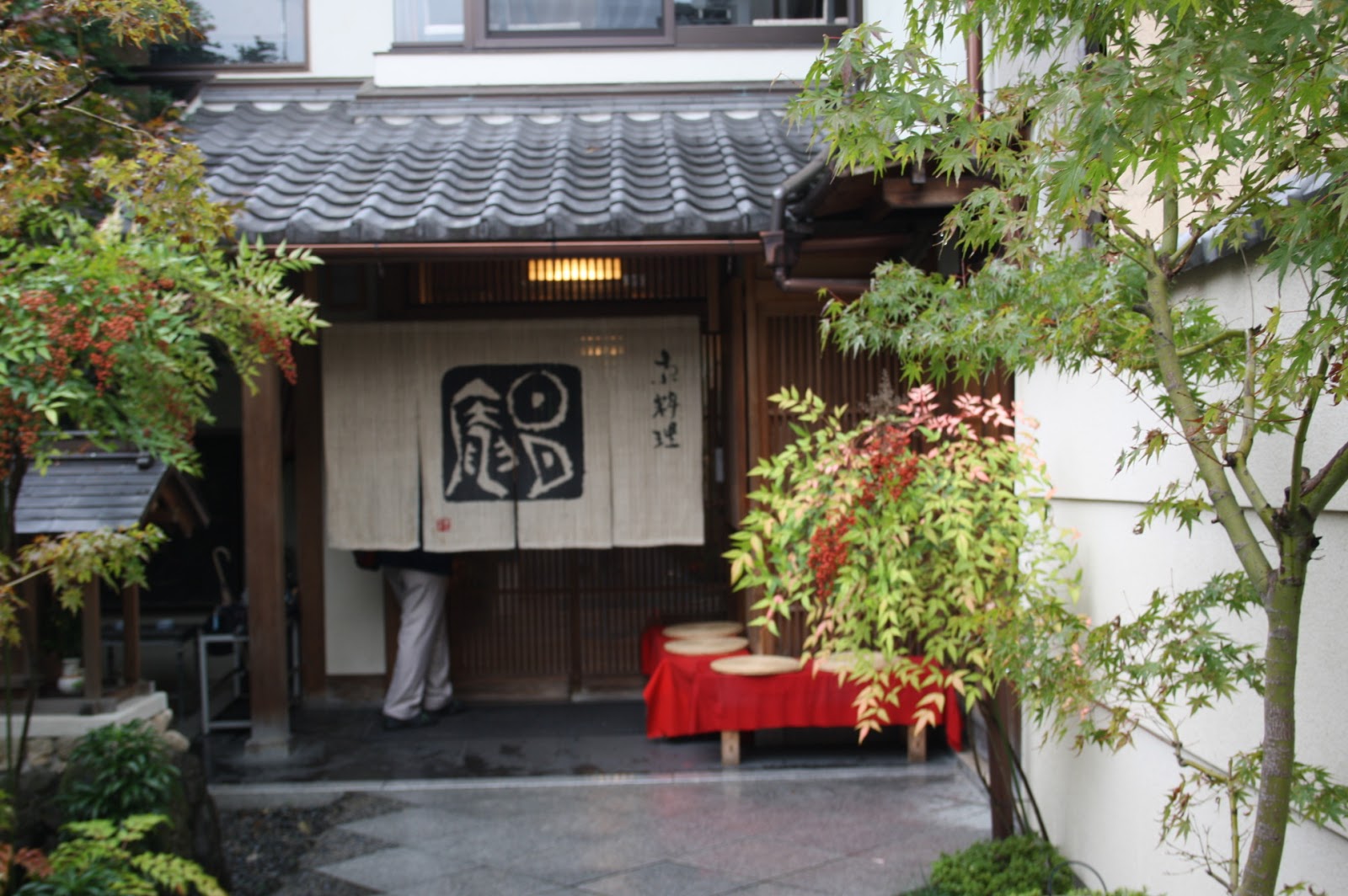
A cover-up introduction helps.The first dish is the Japanese omelet with eel, like a folded egg pancake with eel fillings served with grated wasabi. There's a hint of citrusy smokey flavour and its love at first bite! Like all die hard neo-convert, one is willing to keel over for eel. The main course arrives in a lacquered wooden box that opens to reveal four long glistening slices of eel on a bed of rice. There's a small bowl of miso soup and smaller bowls of pickled vegetables. A sprinkle of sansho, a schezwan pepper powder with a strong flavour of lemon, is all that is required to take it to another level.
The Japanese take their food very seriously. So seriously that generations of chefs can concentrate on perfecting just one dish. Like Nodaiwa, backed by a history of 200 years, one Michelin star (2016) and a fifth generation  owner who was awarded the nation's highest skilled craftsmen a decade ago. We manage a booking at their Ginza outlet. Locating the place is however like playing Blind Man's Buff and repeatedly hitting the wrong target, made worse by heavy rains. Yes, there is a sign right next to the Ginza station entry, but it is a small one and in Japanese. A kind salesman of a departmental store near by guided us all the way. I suspect he had enough of giving directions and it was sheer exasperation that made him play guide. It was almost like a Pied Piper enactment with three groups following him. It was only on the way back we discovered that Nodaiwa is bang opposite the legendary Sukiyabashi Jiro, Ginza, said to be the best place in the country for Sushi. The Unagi at Nodaiwa was served the same way but it was perceptively lighter in tint and bigger in size. While connoisseurs maybe able to pinpoint the differences however nuanced, for the initiates it just increases the craving.  The image of the Indian eel vaporise into oblivion.

Izakayas or gastro-pubs are to Japan what pubs are to Ireland, Tapas bars to Spain and to some extent what legendary Dhabas are to India. Its traditional to the hilt and so quintessentially Japanese  that finding those with English menus can be both a relief and a tad discomfort evoking, as if a foreign language has no business intruding. What is authentic to the core is the Japanese flavour, cuisine and spirits both. Apparently one way of identifying an Izakaya is to look out for red lanterns at the entrance. In his book Izakaya: The Japanese Pub Cookbook, Tokyo based editor and journalist Mark Robinson says the best way to judge an Izakaya is 'the closeness of the master to his customers'.

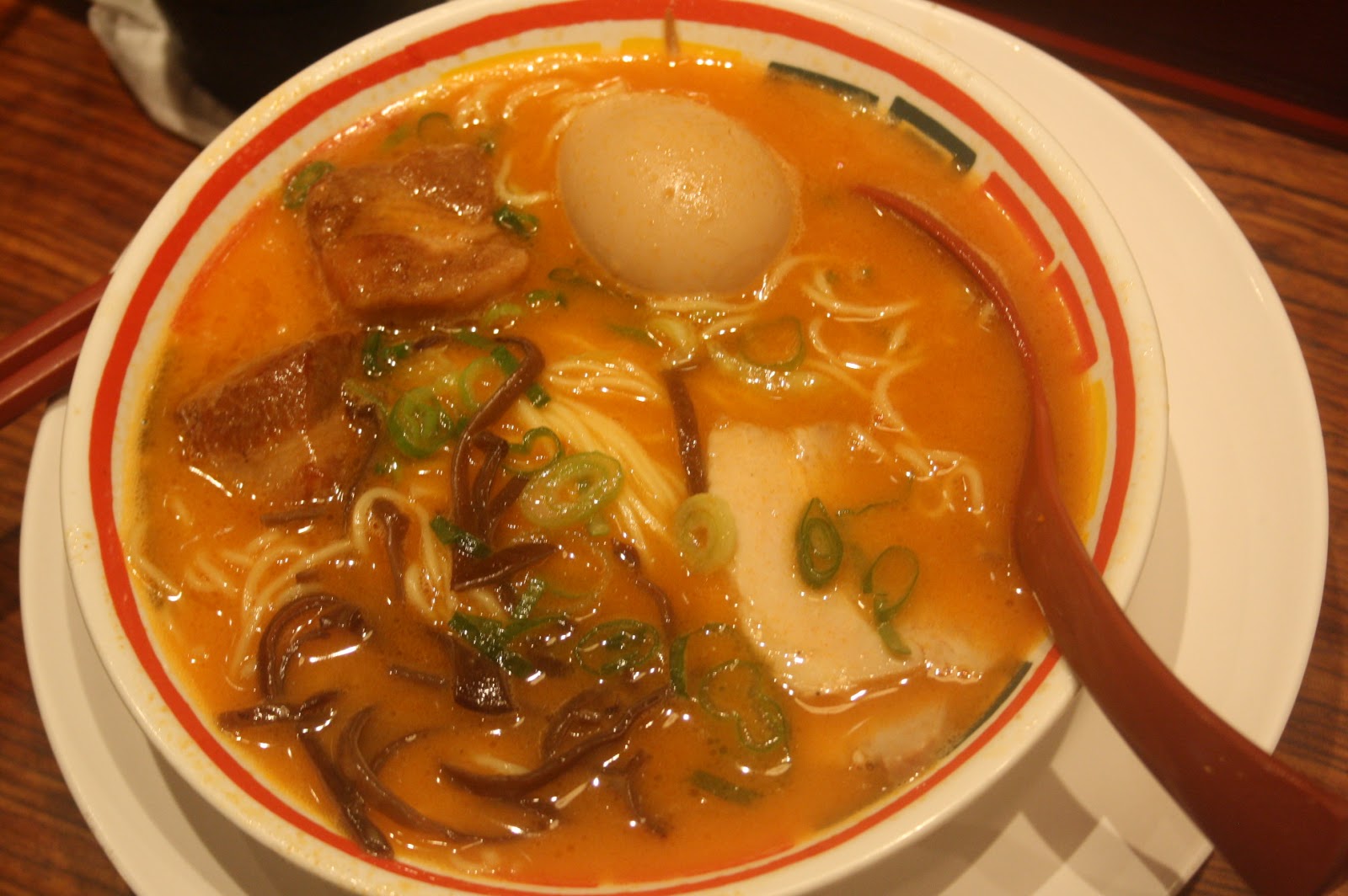
The closeness is literal. The Izakayas are usually small in size and English menu or not, everyone is made welcome with lots of smiling and bowing. The layout in the Izakayas made me realise why the Japanese excel in the art of Bonsai even though it might be of Chinese origin. It's not exactly dwarfing but managing to make the most of small spaces without inducing a feeling of claustrophobia. How small? Just three tables sitting two each at almost thigh touching distance  at the only pork Ramen Izakaya, up a narrow flight of stairs, at Takeshita Dori (Fashion Street) Tokyo.  Which also meant that the chef had to prepare just six Ramen bowls at a time; each bowl a fountain of deliciousness.  
 
In almost all Izakayas, the chef is literally across  the counter and, you can see your dish being made right in front of you. Not knowing the language is not a hindrance, over the days we refined the art of ordering through pictures on the menu. Better still is to look at what your neighbour's, literally at elbow nudging distance, are having and point it out. I did that a six-seater bar in the cramped, crowded alley of Golden Gai, Shinjuku and had the most delicious salted raw fish. Another time it was fatty minced seasoned raw tuna rolled in seaweed. 


There's nothing gleaming about the Golden Gai. A little away from Shinjuku's glitter and gloss, the six narrow lanes are rather dimly lit (in comparison with its neighbourhood) with over 200 tiny bars housed in low rise buildings crowding into each other. Tiny is the operative word with at most ten patrons cramming in. If the rest of Tokyo is gentle and civil, Golden Gai is the unbridled wild child. The bar themes are something else indeed: Gothic is almost passe, there is hospital, horror movie, art house cinema and a close cousin of S&M. And there's music of every genre possible. All letting-down-hair is however strictly to be done within the bar premises. Once outside in the alleys, the alley rules have to be adhered to as laid down by the Shinjuku Santo Shoten Management. The five prohibitions go from smoking tobacco and cigars to climbing buildings and fences. It's very hard to imagine the locals doing that. In brief, all highs have to be contained indoors!  

The indoor ambiance is of course highly spirited. The Golden Gai bar goers are a loose mix of foreigners and regular Japanese office goers, who seem to undergo amazing transformation once they find a seat in a nomiya (drinking place), all staidness and poker faces vanish. Outside its a different story. Incidentally, while Sake has become a global knowledge and even Japanese whiskeys are fast climbing the drinks chart, Umeshu or wine distilled from small seeded fruits like berries, cherries, apricots, plums etc still remains mostly confined to Japan, which is baffling considering they score every point for best wines. Its sweetish, a tad tart-ish and slow seeping alcohol that infuses every pore with a warm glow.    

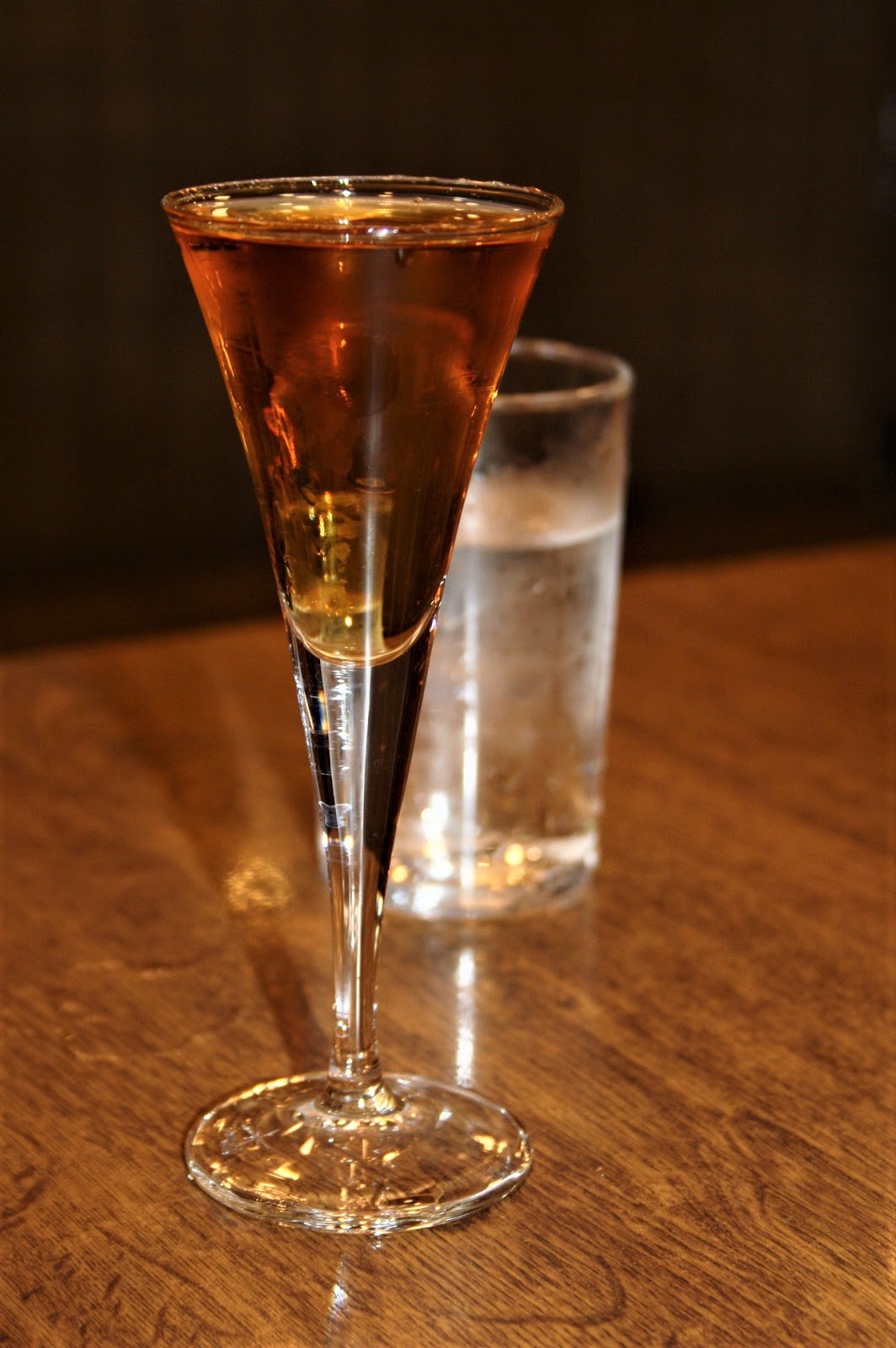
Umeshu may yet one day find its way out of  Japan in large barrels but  Denki Bran, the unique one-of-its-kind brandy based cocktail will remain the signature drink at Kamiya Bar, Japan's oldest western bar founded in 1880. The Asakusa district bar is a legend. What is so appealing is the lack of pretence and fuss. It's like hearing a western movie drawl saying: Want a drink, walk in , sit at one of the plain tables and place your order. There's no oriental decor elements or for that matter any decor element to distract and bright lights everywhere. I loved the story of how its signature drink came about. Two years after Kamiya was set up, its founder Denbee Kamiya began experimenting and formulated Denki Bran or Electric Brandy, the cocktail that is still thriving and how. A rich golden liquid, it is served in a tall shot glass that looks like an upright trumpet and strong like a horse with a ABV (alcohol by volume) option of 30 or 40 percent.
 
 
Much older than Kamiya and the oldest sweet shop in Tokyo is Umezono, founded in 1854. On our own we would have been totally lost but our Japanese friend  knew exactly what to order. The first was Amitsu with scoops of red bean paste, ice cream scoops, agar squares (at least I thought so), some red beans, orange segments, one bright cherry etc in a delicately sweetened liquid.  The next was Tokoroten or Japanese jelly noodles. The noodles are made from Kanten, the gelatin of a native seaweed. It's apparently considered very cooling during summer. The one we had was said to have a dash of Karashi or Japanese mustard and was again douses in a lightly sweetened vinegar which is also said to have a fraction of soya sauce. The experience was a novel one, but an encore - I don't think so.
 
 
For an all out sweet affair there is however nothing to beat the Japanese crepe. No half measures again. A crepe is a crepe all right but it is the fillings and the way it is served that add the Japanese touch and the zing factor. The crepes can go from plain flour ones to buckwheat and what have you. After checking out the vast filling choices over and over again, at one point I was tempted to shut my eyes and  just the hit the chart with my index because I was tired of my own dithering. The choice made, the crepe is stuffed, rolled like a cone and served. It's more than a meal.
Rough bamboo rafters as if they have been there forever, ancient and smoke sooty, equally aged tables and chairs, somewhat cramped but welcoming. At this eatery at Shimbashi the black panels with Japanese scripts were fascinating. One could have asked somebody for an interpretation but I let it be - the unknown should sometimes remain the unknown. What didn't require interpretation of any kind were the dishes that rolled out: sashami with a bit of bonito flakes, wasabi and some seasoning; the calamari; the sea food; the yakitori  platter; the soup; the endless rounds of Sake and  Umeshu. At the end you feel good about everything, just everything. And everybody. Okay, not every everybody! 


Hakone in Kanagawa prefecture is about one hour and twenty minutes from Tokyo by the Romance Car limited express. This is from where you can get closest to Mount Fuji, the sulphur springs and Lake Ashinoko.  Seafood is said to be the speciality at Hakone, especially Himono, fish or shell fish that are dried naturally (sun, wind) and served grilled. The Japanese eatery Kinosuke (Six western seating tables and two Japanese style) is where we walked in for dinner. It was there that  we learnt about Himono  and had one of the best ever dining experience. Kinosuke's expertise is charcoal grilling and the whole fish was redolent with smoky flavour and can't-have-enough-of-it deliciousness. Partner that with a platter of sashimi and glistening grilled luscious pork and of course, rounds of plum Umeshu - bliss! While in Hakone, after a sailing trip down Lake Ashinoko, in Kanagawa we walked into a tiny eatery (just two tables) completely manned by two elderly ladies. The one who was the chef also doubled up as server and cash counter manager, chirpy with impeccable English. I wasn't too keen on the pork curry (curry in Japan!) but went with her suggestion and I am glad I did so. Very homemade flavour and taste.


If there's is one Japanese dish that nobody can hold a beef against its Wagyu beef. Just couldn't resist writing that! It was quite a dilemma-to beef or not to beef, eat that is.  Beef was something that I ate centuries ago, as also mutton and recently chicken; I am porcine, its only pork meat. The husband however has no such hangups thankfully. It was in Kyoto's Pontocho Alley, the hot nightspot jammed with bars and eateries, running parallel to Kamogawa River in a crowded restaurant (waiting time seemed never ending) that he got to indulge himself.  The dish was a visual delight and going by his reactions, it obviously tasted divine too. I got more than my share of compensation with a sensational spicy mabao rice with black pig, among others including peanuts with amami sugar, rolled Japanese omelet and plum Umeshu with black sugar. 


There are those who call Kaiseki the finest meal in the world. Kaiseki is the traditional multi-course Japanese meal, haute cuisine as some like to call it. Kaiseki is said to be rooted in Kyoto and that it is also it's oldest culinary tradition. It's a meal served in courses and a perfect symmetry of taste, texture, visual beauty and presentation. It's the best sensory overload, of course at a price. We opt for Otowa-Gozen and the Jo Unaju sets. Like all set meals there are starters, soup, main course and desserts.Between the two sets there were sashimi, chawanmushi( traditional Japanese custard, a steamed savoury), miso soup, roasted Tofu with miso, grilled salmon and grilled eel and egg over bed of rice besides quite a bit of pickles. The sweet dish was a cold red bean custard. Is the hype and the high price worth it? In one word, yes.It's a must do experience. The ambiance, the view from the large windows and the service all add to the pleasure.


There have to be road bumps too and both were there in Kyoto itself. It was like a slide from from the sublime to the slump. Fushimi Inari Taisha, the Shinto shrine dating back to the 8th century, like all prominent tourist destinations, has the lanes leading to it lined with the regular small food stalls, souvenir shops and everything that aims to be tourist magnets. What was fascinating was to watch, in many stalls, was the making of a ball like item that claimed to have egg, octopus and rice flour. Deft hands would pour in the mixtures, one by one and roll them around swiftly but gently, almost like an edible cricket ball taking shape while hot steam wafted up. Naturally, there were many takers for it and naturally, who could resist the temptation.  It was a disaster every which way, a gooey tasteless blob that had not a single redeeming feature. We looked for the first trashcan to be bin it. Then in one the lanes there was this crab cake stall. Crabs are my undoing. In this it was literally undoing and unbecoming, that was no crab meat, it was artificial crab all the way. It felt like being cheated twice, a rare feeling in Japan. That evening we went to a cute Irish bar followed by sausage pizza in a Japanese joint.  Just like that.  


  Budding Lavender PICTURE-PERFECT PROVENCE Some love stories can happen unplanned and unexpected. In life, I suppose, one can fall headlong...